What do we mean by autonomy in responsible sourcing?

The word autonomy sparks mixed reactions. For some, the idea of AI‑driven autonomy feels daunting. For others, a self‑managing system simply means freedom from manual admin work. We are increasingly hearing it in the world of responsible sourcing and supply chain risk management as AI becomes central to our processes, operations and strategies. But what does it mean in practice? More importantly, how can businesses begin the transformation journey to autonomous responsible sourcing, and how can human expertise guide and optimise this transition?
Getting clear on the role of AI
AI is increasingly playing a significant role in virtually every operational process. There is, however, an art to its adoption that requires nuance, expertise and intention, especially in responsible sourcing. With this adoption, the role and scope of sustainability professionals are changing. Sustainability teams are navigating intricate and evolving risks and complex regulatory requirements. Increased risk exposure is forcing businesses to take a more tailored approach to due diligence rather than the outdated, blanketed strategies. AI has presented immense opportunities to streamline what would be (and has been) an intensive, complex and intricate due diligence process and allow teams (when used correctly) to reduce much of the previous manual admin.
Due diligence without AI: traditional compliance management
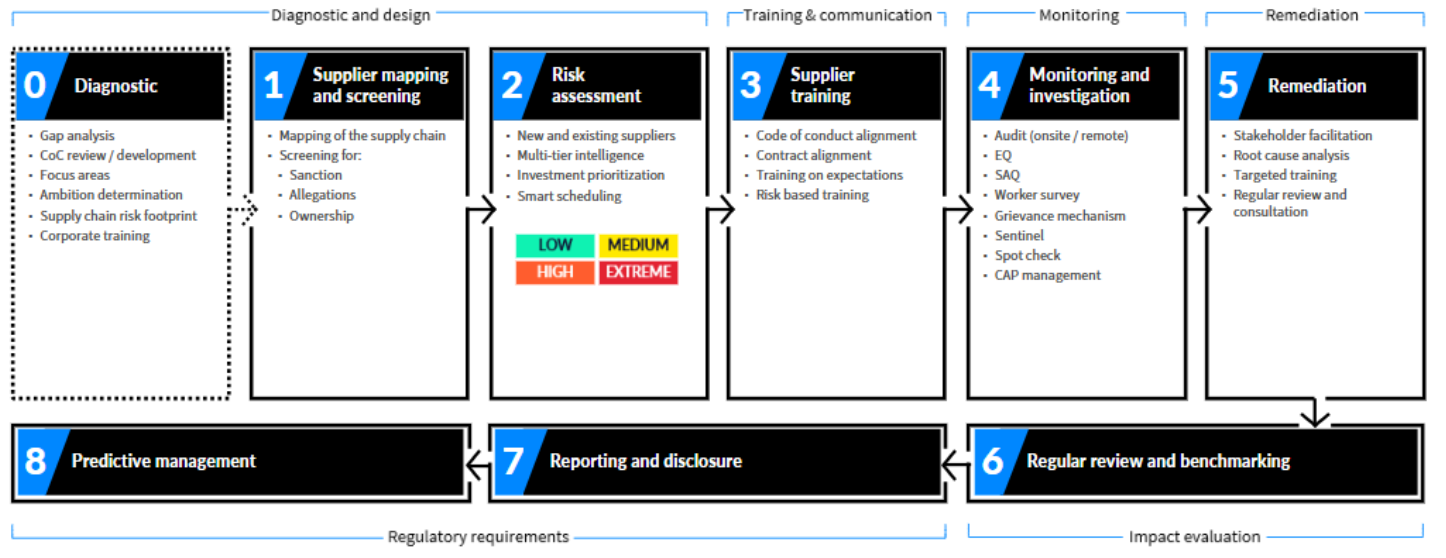
The role of AI in responsible sourcing, simply put, takes traditional compliance management approaches to connected, automated workflows powered by unique and proprietary risk intelligence.
This means taking manual data analysis from numerous sources and turning it into pattern recognition across your entire network. It means transforming static, outdated risk assessments into an evolving risk intelligence framework that feeds intelligent programme design. It means transitioning from painful manual scheduling that misses critical deadlines to autonomous audit and assessment scheduling and smart corrective action planning with proactive support and predictive outcomes. The vision for AI in responsible sourcing is a fully connected workflow, where real-time data feeds directly into business decision-making.
Due diligence with AI: connected, automated workflow
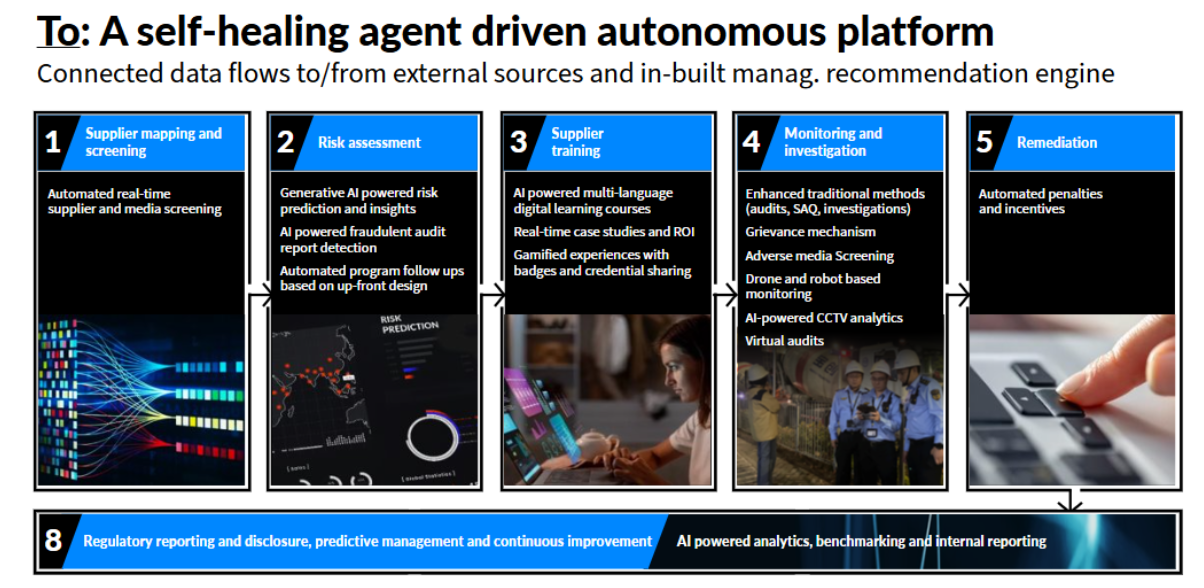
The importance of human touch
A key point to address when speaking about the new era of risk management that often sparks apprehension in most teams is that AI is not about replacing humans. It's about freeing them up from the manual admin work so they can focus on strategic, big‑picture decisions. Ultimately, AI and automation stop where human rights and business decisions begin.
Human intervention plays a critical role in optimising the capabilities of AI-driven risk management. This includes humans stepping in for:
- Verification: Humans validate AI‑generated insights and compliance outputs to ensure accuracy, credibility and alignment with standards and historical data.
- Calibration: Oversight teams fine‑tune models and parameters, adapting automation to business priorities and contextual nuances.
- Guidance: Leaders provide strategic direction and ethical judgment, setting boundaries and priorities that shape how automation is applied across sourcing programmes.
- Decision-making: Humans make the final calls on complex or high‑stakes issues, combining AI‑driven intelligence with experience, context and accountability.
The transformation journey
Transforming your responsible sourcing with AI will require a transition process that moves from reactive compliance toward proactive, intelligence‑driven excellence. Many organisations are still operating in a manual mindset relying on static questionnaires, one‑size‑fits‑all programmes and calendar‑based audits that focus on compliance but leave them exposed to vulnerabilities. Progress begins with systematic programne management utilising structured risk assessments, segmented supplier programmes and regular monitoring cycles supported by integrated platforms like EiQ that bring discipline and consistency to the process. The next step will move toward intelligent responsible sourcing, where AI enhances risk detection, enables dynamic segmentation, and automates workflows from audit routing to corrective actions. This intelligence layer transforms each step into a smarter, more responsive system.
Ultimately, the destination is autonomous excellence: self‑optimising risk assessments that learn from global supplier patterns, adaptive programs that evolve with shifting landscapes and predictive audit ecosystems that prevent issues before they arise. By combining AI with human expertise, businesses can move beyond compliance to a fully connected, autonomous responsible sourcing model that drives resilience and helps businesses achieve total supply chain confidence.
Related Posts
Discover more insights from our blog.

Australia's modern slavery reform: why waiting is the expensive option
Australia is consulting on a criminal offence for failing to prevent modern slavery. But the defence rests on evidence, and evidence takes time to build.
Building for volatility: what we learned at the EiQ Global Summit in New York
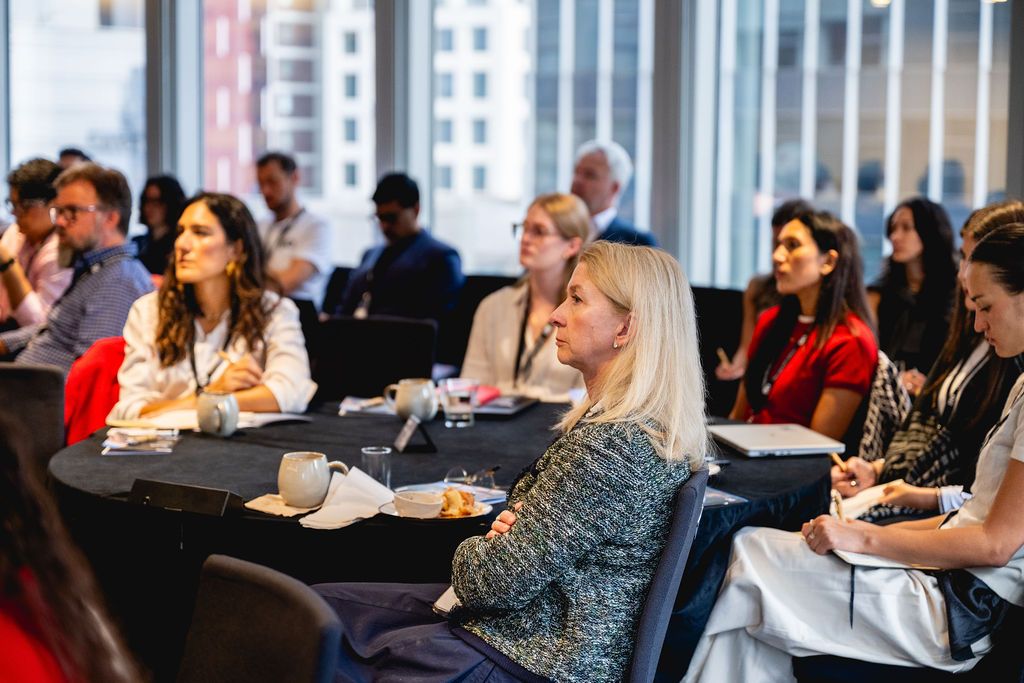
What responsible sourcing and procurement leaders discussed at the EiQ Global Summit in New York, September 2026

EiQ by LRQA positioned as an Innovator in the 2026 Verdantix Green Quadrant
EiQ has been positioned as an Innovator in the Verdantix Green Quadrant: Supply Chain Sustainability Software (2026) – an independent benchmark of 16 providers.