Forced labour, modern slavery and the limits of disclosure

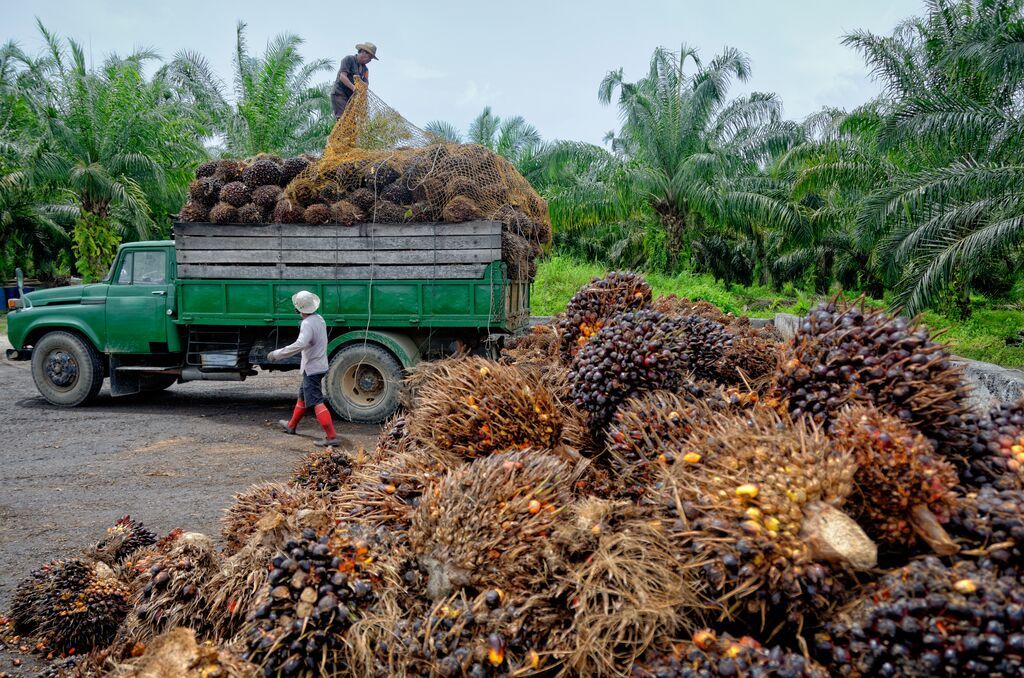
Erin Lyon and JP Stevenson on what changes when forced labour carries a price
A decade on from the Modern Slavery Acts in the UK and Australia, disclosure statements have piled up. Evidence that forced labour has fallen is harder to find. The US has now made forced labour a tariff line, with new duties of 10 and 12.5% on dozens of economies under its Section 301 investigation.
In this episode, EiQ Content Manager Jenna Thompson speaks with Erin Lyon, Global Head of Partnerships at LRQA, and JP Stevenson, Chief Revenue Officer at EiQ. They discuss what changes for a brand when the risk moves from being named to being taxed, why EiQ has rated Western markets high risk for forced labour since 2021, what a second generation of modern slavery legislation might demand, how purchasing practices drive the violations brands then audit for, and how the cost of a responsible sourcing programme compares with the cost of being caught.
Episode length: 23 minutes
Full transcript
JT: Hello and welcome to our session on forced labour, modern slavery and the limits of disclosure. I'm here with Erin Lyon, Global Head of Partnerships at LRQA, and JP Stevenson, who is our Chief Revenue Officer at EiQ. Would you like to both introduce yourselves?
JS: Erin, you first.
EL: Thank you JP. Hello I'm Erin, Head of Partnerships, as you said. I originally trained as a lawyer and then worked out in Asia for 10 years and then recently moved back to the UK.
JS: Cool. So I'm JP, I'm the Chief Revenue Officer. I'm American originally, but actually I have spent most of my career working with factories and in Asia. So I spent about a decade with Li & Fung looking at a lot of the world's apparel supply chains before then joining LRQA to build out EiQ.
JT: Perfect. Thank you both so much for being here.
So earlier this month, the US announced new tariff duties of 10 and 12.5% on dozens of economies under its Section 301 investigation, with forced labour cited as a key driver. And it comes a decade on from the Modern Slavery Acts in the UK and Australia, where mountains of disclosure statements have been filed. But the evidence that forced labour has actually been reduced is really thin.
So today we're going to be asking what's actually changed, whether disclosure-based regimes were ever going to drive the outcomes they promised, and what a regime that does work might look like.
So, I'm going to start with you, JP. For years, forced labour rules were framed as a compliance and disclosure obligation. And the US has just made it a tariff line. So what actually changes for a brand when the risk moves from “you might get named” to “you might get taxed”?
JS: Thank you, Jenna. So first let's be clear here. This type of provision is not new. In fact, the United States has some of the oldest forced labour laws in the world. But – and you see this also, if you look at WROs for example, that have come into effect in recent years on companies, even though it was always the case actually that a compliance or non-compliance with forced labour laws could be viewed as a tax on your supply chain – a lot of folks didn't necessarily take it very seriously. I think the bar has been lifted up with this.
EL: I think as well, 301 hasn't come in isolation. So to JP's point, the legislation has existed for a long time. It just hasn't been enforced in terms of having a requirement to make sure you that you can't bring a good that's utilised forced labour into the US. That's existed for many years. It just hasn't been enforced.
Then if you look at all the recent trade deals that the US has done with Indonesia, with many other parts of the world. If you look down the paragraphs of what's been agreed between nations, you get to paragraph between four and nine, and there's a forced labour paragraph in there that basically says that country commits to having a forced labour ban and making sure that it is complied with, and making sure that you have legislation to ban forced labour internally, and that you enforce that. So we've seen activity from a lot of countries to put that in place.
One of the key requirements of the Modern Slavery Act has been around training and education, so that everybody understands what it is. It is a requirement that you have trained your entire workforce. So in theory, if you're a business operating, for example, here in the UK and you've got more than £35 million turnover, you should know what forced labour is, modern slavery is, be able to pinpoint it and be able to do something about it. But we know that actually the incidents in this country are on the increase, so something's not working.
JS: You brought up a good point. So I think a lot of folks do assume that it's not in their backyard. What's interesting is EiQ has rated many Western countries as being high risk for forced labour for many years. When we first came out with that in the US in 2021, my God, it was such a difficult argument to have with American brands, actually, that you should have the same level of scrutiny for your US labour practices as you would have in Asia.
Two years later, we're right, and we're ahead of the game actually, because our clients were able to see much earlier on that they had this risk within their operations. But still today, I think people have oftentimes either underinvested in their risk assessment process or wilfully been ignorant of this potentially happening here.
EL: Or just assuming it's not. Nobody wants to accept that it's happening.
JS: Yeah, yeah.
EL: In your own operations as well.
JT: We've had Modern Slavery Acts in the UK and Australia for around a decade. Is there any evidence that they've actually reduced forced labour, or are we mostly looking at compliance reporting?
JS: So the question of if there's evidence is an interesting one because I think what we're seeing in these countries that have modern slavery laws now, certainly Australia, is a revisitation of their effectiveness because there isn't any obligation, or the orientation of law, hasn't been to encourage positive disclosure. So the statement of actually what your modern slavery risk management processes are surfacing, and if anything, in cases where brands have come out publicly and said that our control processes worked, we found instances – they've really faced large public backlash.
I think to that, we need to look at whether or not the framework needs to evolve to be putting brands in a position actually where they are able to do so, or were that's common practice, because these risks are much more prevalent than we think.
One example I like, so a company that takes positive disclosure very seriously, is Tony's Chocolonely, which works on cocoa supply chains. And we won't look at forced labour there. We'll look at child labour because when we look at their sustainability report, they talk about their work to eradicate child labour. Now Tony's Chocolonely is about 0.2% of the global market share for chocolate. So it's a really tiny chocolate brand, but it's focused on labour issues within cocoa supply chains. Last year in their 2025 report, they reported 3,000 or so instances of child labour being identified within their operations. And of those, they also acknowledged that there are about 900 instances where the underlying issue was investigated and child labour in those instances was resolved. So about 25% of the time they found that their interventions worked.
Now let's consider that in the context of the size of that brand and what we hear about big cocoa supply chains. No one that I know of, of the scale of any of the chocolate majors, is going out and talking actually around their ability to effectively identify or surface risks in this way and at that scale. And if we're saying that the best-in-class operation, which is doing so not necessarily because of the law, but because it tends to be their brand orientation, it's their mission, three out of four times actually isn't able to resolve the issue – that's what resolving 800 of 3,000 cases implies – we should be really careful about claiming the success of these other laws, where there is no requirement to actually go and explain what you do with the processes you have in place.
EL: I would agree. So when those laws came into place, they were designed to raise the bar, but they were very targeted at very large companies. Each of them has a “for companies above this size, you should be doing x, y, z”. And then obviously they're the companies at the top of the chain who'll be asking questions of those that come below. So you're starting an education process. You're starting a shift in behaviour. And you're also doing things like you're requiring the CEO to sign the statement that you make to create some kind of governance around the process.
I've seen companies that do it really well, that spend a lot of time line by line on accuracy, on making sure that: does this comply with the intent of the requirements rather than the strict requirements themselves? So going in and looking at the guidelines and looking at the intent.
And somewhere it's a paper exercise where it's enough to describe and say: no, we don't do anything. No, we don't do the thing on this. We don't do anything. So it's right for sort of a 2.0. Where will that 2.0 for that legislation go to? That's going to be a very interesting landing place. There's a lot of pressure in terms of: there has to be consequences. There has to be some kind of result in terms of your what it is that you conduct.
But I think also we've seen governments going in slightly different ways. So here in the UK as well, we've seen the same kind of requirements being built into other legislations, especially around energy. So all the new energy legislation, you have to have done the requirements of what were in the Modern Slavery Act, in terms of doing your due diligence, putting that place. It's already built into that new level of legislation anyway. So I think we'll start seeing lots of different attempts to reduce forced labour for the right reasons. Within lots of different levers that governments can pull.
So one will be the disclosure requirements. Tell us what you're doing. Two will be: in critical industries, we're going to put in key requirements. And three will be: where we can see that there are specific issues in a certain supplier, in a certain country, we're going to have a ban on you being able to use them or to bring what they're making into this country.
JT: The US is now using trade enforcement on forced labour and supply chains abroad. So what's its own record on those issues. And do you think that affects how the policy lands with trading partners?
JS: If folks are looking at this in the context of the US, you need to have perhaps much stronger controls there than you would in many other countries that are on the ban list for 301. But I guess, you know, that the US itself has its own checkered past doesn't necessarily mean that you can't take this law any less seriously.
EL: A lot of the requirements are embedded in international ILO requirements or international norms and agreements that most countries around the world have signed up to. So it's quite ironic that we're spending so much time discussing compliance with basic laws that we've all agreed to, that we've just acknowledged, or it has become the norm, that we don't really have to comply with them.
JS: Completely. And this is what surprises me, looking at a lot of our factory data in EiQ, because you can get very, very large retailers that operate in many of the world's most regulated markets, where they have violations, like 10% of their factories having their workers worked continuously 20 days plus. And to be really clear, in no country is that legally permissible.
They have visibility into this, you know, tools like EiQ support that, but as does the social compliance processes that they have built out. It's just it is not yet deemed to be, I think, central enough to the business or oftentimes the business model itself is predicated on pretty rotten sourcing foundations that make it hard to readjust.
EL: When you say sourcing foundations, do you mean purchasing practice?
JS: Purchasing practices. Yeah.
EL: That leads to having to have those activities of the 21 days in place in order to meet the demands and the requirements.
JS: Exactly. Like I think in particular, if you look at a lot of the e-tender systems that are in place by a lot of hard line discounters, very common to see exactly that type of really transactional arrangement that forces a lot of externalities to occur in order for someone to be cost competitive with it. And the sad reality is these are companies that you and I all have shopped at. We have inadvertently actually supported these labour practices. But it is because actually it's not yet, I think, broadly enough acknowledged that this exists within their operations, that there hasn't probably been the shift that we hoped to see.
EL: We also have a disclosure regime that is reliant on a supplier either providing information, sharing information voluntarily, or being audited in order to extract information to show how they operate.
But on the other side, you don't have to show the system that you use in order to come to a calculation of the value for what you will purchase those goods for. So it's an unfair relationship in that respect because you can construct a purchase price. It's completely separate from “and this is how I'm managing my operations to achieve that price”. Whereas if you had a bit more disclosure on this side in terms of “this is how I work out the value of what I'm purchasing”, you might get a more equal relationship.
JS: Yeah.
JT: So Erin, from a legal standpoint, what's the meaningful difference between a regime built on disclosure and one built on trade enforcement? And where would you say each has the most teeth?
EL: Okay. So disclosure-wise, I think in its infancy when it first came out, that was the carrot to incentivise, to report, to focus on this issue. And I think the assumption was based on the information provided, investors would start using that data to inform decision making. For a long time, that didn't happen. Partly I think because climate was such a big part of the conversation and a real investor focus. And then also because the quality of the data that was being disclosed didn't enable decision making, it was hard to be comparable. There wasn't the quality, there wasn't the scope. It wasn't – I hesitate to use the word easy – but it wasn't the same way that you could look at climate data and make decisions.
In the past 18 months, I think that's starting to change, and you're starting to see investor coalitions realising that unless companies are managing supply chains really well, potentially there's impact to value. So you're starting to see investor groups, some specialist ones, but getting bigger, starting to look at, well actually what is being disclosed here? How can we use that information to inform decisions and to push for better practices, for legal compliance, etc.?
On the other side of things, I think it's more of a big stick and it's an immediate material issue if you are caught within an action. So let's take a withhold release order as an example. If you are the company that's impacted by a withhold release order, so often that's outside of the US. A withhold release order is issued by the US. Customs enforce that. So let's take an example that's just recently closed, which is FGV palm oil supplier in Malaysia. The cost of fixing to get back to being able to trade and ship and to import into the US was $175 million. So it becomes a really big stick in order to beat that supplier.
But then I think of it often like dropping a pebble in a puddle, because the ripple effect is huge. Because you may have that one supplier, but there are many in that industry who may be put on notice, or will be on notice from buyers to them of: that could happen to me next. So they might not have to spend £175 million and put in all new accommodation, put in Starlink, make sure that all the remediation payments to all the foreign migrant workers have been completed. But nevertheless, they'll be looking to put in place a lot of improvements costing millions and millions and millions of dollars. So there's a big material financial impact of that second approach.
JT: So we've talked a lot about forced labour regulations and risk in a number of countries. Where are the workers coming from who are being forced into these labour practices?
JS: Great question. And actually, this is so important because this problem is not going away. Ironically, actually, like in the case of the additional 10/12% tariff on goods, if a lot of that gets passed on back to the factory, as is sometimes the case, if anything it will complicate labour practices further.
In the case of the United States, you see large influxes of labour coming through the grey market from Latin America, from Mexico. Sometimes this is through unaccompanied minors crossing the border. There can be all sorts of really problematic arrangements in place there. Colombia, a lot of folks come from, and the reason why they come up, the reason why this exists is because the US is a really tight labour market right now, and the enforcement mechanisms that are in place today really don't pass muster.
JT: The fines now for non-compliance are very high. So how would that compare to the cost of running a responsible sourcing programme?
EL: So the money that we've spoken about in terms of remediation costs are incredibly high. But let's break it down in terms of costs to who and when. So if you're facing a withhold release order, it is the supplier to whom the withhold release order is applied, who is having to remediate all of those circumstances.
So it might be, in the case of FGV, which is documented in terms of that was on that Malaysian company. They had to make repayments to workers, they had to put in place new accommodation, etc. So that's a cost to supplier. But that cost is then being spread out across the entire industry. And that is a cost of buying palm oil from Malaysia that hadn't originally been costed in. So it's going to increase the cost to business because the cost of employment and decent working conditions have now been applied. So you could potentially see an increase in, Malaysian palm oil costs. But that then will be passed to buyers. So that's the cost of having compliance there.
In terms of if you are putting in place a responsible sourcing programme, you want to avoid that situation happening because you want to avoid your costs increasing. You want to also avoid disruption, because during that whole period, it's very hard to access X raw material or to have that company who is subject to a WRO or a different type of trade ban at that time, being able to import into the US, which is going to have a big impact on your ability to sell your product.
If you have the right programme, you are looking at having in place a risk-based due diligence programme, which will have already told you: that is where the high risk exists. And I need to go deeper into better understanding what is happening there. How do I mitigate it or how do I move? Because if you've done that, you will go beyond a surface level audit that doesn't give me much detail, but you will know, okay, there's the presence of foreign migrant workers in that location. The likelihood, therefore, of them paying a fee to get that job is very high. Therefore, the likelihood of some kind of forced labour is very high. So I need to dig deeper and I need to engage with that supplier. I need to get to a stage where I am happy that actually the supplier I'm engaging with has the right practices in place, or I'm looking at alternatives.
JS: One thing that I think is really interesting, just last week. So this point I think has been slowly understood by many brands out there on the value of responsible sourcing. But just last week I had a conversation with a vendor, a very large apparel group, that echoed that same logic. It was like, we're not going to skimp out on, say, $2 million of sustainability services, because actually the cost of us not potentially running those is so much greater if we see buyers turn away from it.
JT: Thank you both so much for being here. I think there's so much to unpack with this issue, isn't there? And so I really hope that this was useful. I found it really interesting. I hope that you all found it interesting. And if you'd like to keep up with what we're doing, you can visit our website at eiq.com and you can follow us on LinkedIn. And I hope to see you again at another one of these very soon.
Related Podcasts
Discover more insights from our podcasts.

Cracking Scope 3 - why resolving data confidence is crucial
Our EiQ experts dig into why Scope 3 continues to challenge businesses, how to resolve the visibility gaps and why it’s more critical than ever to do so.
EU omnibus proposal: cutting through the noise and refocusing on the fundamentals of sustainability best practice
Amid diverse opinions on the EU Omnibus Proposal this podcast episode offers valuable insights from industry experts on how businesses can stay ahead in an evolving regulatory landscape.
Automating due diligence: how to build the next chapter of responsible sourcing
Our EiQ experts share insights on how to shift to autonomous responsible sourcing with AI and what role humans play in its optimisation.