The heat signal most supply chain programmes can't see

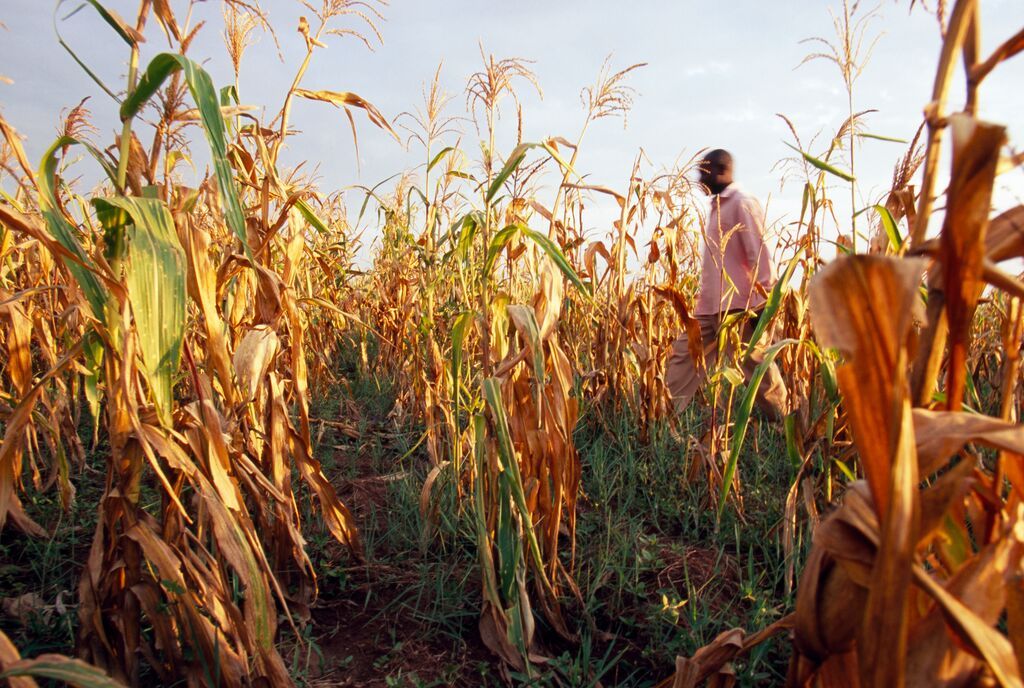
Heat stress isn't a new risk in supply chains, but it's changed shape over the last two years. What used to sit in the background of worker welfare discussions has become an operational disruption, a due diligence question, and an insurance and continuity issue all at once. This hot summer has made that harder to ignore.
Across South Asia, temperatures were running 5 to 8°C above seasonal norms from April onwards, with daily maximums topping 46°C in Delhi, Karachi, Lahore and Dhaka. India's Meteorological Department recorded a prolonged, early-onset heatwave that ran into July and claimed at least 47 lives across India and Pakistan by early June. Europe followed in late May, when the UK broke its all-time May temperature record and wider heatwaves swept Portugal, France, Spain and Germany.
Late last year, the International Accord for Health and Safety in the Textile and Garment Industry agreed to develop the sector's first formal Heat Stress Protocol, treating extreme heat as a hazard within its inspection and remediation programmes for garment factories in Bangladesh and Pakistan. The commitment followed advocacy by a coalition of 45 labour, climate and sustainable-fashion organisations, and investigations documenting fainting, dehydration and unsafe conditions in factories in Dhaka and Karachi. It marks the first time heat is being brought inside a binding supply chain safety framework.
This is a meaningful shift, but it's only part of what needs to change.
Productivity is just the top layer
Heat has finally broken into mainstream business coverage of supply chains.
Research from the NYU Stern Center for Business and Human Rights found Indian garment factories supplying major global brands are losing up to 10% of productivity during peak summer months. A separate 2025 study at a Noida apparel factory by the University of Sussex and Royal Holloway found low-cost heat interventions boosted productivity by up to 16%. Cornell's Global Labor Institute has estimated that extreme heat and flooding could erase $65 billion in apparel export earnings from Bangladesh, Cambodia, Pakistan and Vietnam by 2030.
The productivity framing has done useful work, taking heat out of the "worker welfare" file and into the CFO's field of view. But it also flatters the industry's response so far, allowing heat to be treated as an efficiency problem that can be optimised away at the supplier level through better fans, shade and longer-term contracts.
This framing misses the pattern. Heat isn't only landing on the factory floor where productivity is measured. It's showing up in more than one place inside the same business at the same time, and an efficiency fix in one leaves the others exposed.
One signal moving through three systems
The most visible form is worker health and safety. Reporting last year by Climate Rights International documented garment workers in Dhaka and Karachi routinely experiencing dizziness, nausea, chronic dehydration and fainting inside factories supplying major international brands. The Business of Fashion reported similar findings across both countries. Our supplier incident monitoring tool, Sentinel, has surfaced the same pattern beyond the garment sector, in logistics and outdoor work:
- A postal worker in Italy whose heatstroke was recognised as an occupational accident
- A tree services worker in the US who died from heat-related illness despite the employer having an existing heat illness prevention plan
- A US delivery worker who collapsed on route in extreme heat and died days later
Outdoor and mobile workforces are showing the sharpest signal, but the same physiological risks (reduced cognition, slower reactions, higher injury rates around machinery) apply on any hot factory floor.
The same signal reaches food safety. As Kimberly Coffin, LRQA's Global Technical Director, set out on our recent podcast, higher ambient temperatures accelerate microbial growth and spoilage, tighten cold chain thresholds and stress refrigeration equipment precisely when it's working hardest. Food industry coverage this year has made the same point: cold chain assets have to work harder during heatwaves than under normal conditions, using more energy at tighter margins, with every temperature excursion becoming a potential food safety and shelf-life event. For most brands, that risk sits with a different team, in a different reporting line, from the one managing worker safety in the same supplier base.
And it reaches environmental and continuity programmes. Cooling drives up electricity demand exactly when heatwaves stress grids and cause outages, a pattern NYU Stern has flagged as particularly acute in India, where daily summer power outages routinely disable the ventilation and cooling systems that the worker safety response depends on. Heat also compounds water stress and drives agricultural migration, changing where crops can be grown and pushing climate risk upstream into raw materials.
One climate signal reaching three programmes. Yet in most organisations, those programmes are run by different teams, on different review cycles, with different data.
Why heat has been hard to see
There’s a structural reason heat has been slow to register as a supply chain issue, even as its effects have been visible for years. Most supplier audit frameworks don't have heat stress as a coded finding category. It surfaces indirectly through ventilation non-conformances, drinking water access failures, working hours breaches and injury reports.
This is a sector-wide blind spot, and it shows up in the data we monitor too. Heat rarely appears in a factory assessment as heat. It shows up as the things it causes: ventilation failures, water access problems, working hours breaches, injuries. At a Bangladeshi knit composite facility, workers had been falling ill from excessive heat in a tin-roofed building with insufficient fans. The audit captured the problem through ventilation and building-fabric findings, and it was remediated with industrial exhaust fans. Heat was the underlying cause, but nowhere in the audit record did the word appear.
When a monitoring system can't see something directly, it both under-detects and under-connects. Ventilation findings sit in health and safety. Working hours findings sit in labour. Drinking water sits in welfare or hygiene. Read separately, they look like a scatter of moderate compliance issues. Read together, at a facility running 40°C+ for weeks, they look like a heat-exposure profile.
The International Accord Heat Stress Protocol is significant partly because it starts to close this gap. By naming heat as a distinct safety pillar rather than something detected through adjacent categories, it forces a reporting change at the factory level. Most of the industry's monitoring infrastructure is still upstream of that shift.
Heat hits hardest is where resilience is thinnest
EiQ's country-level health and safety data tells a consistent story across the four largest apparel and textile sourcing markets:
| Country | 2026 H&S score (out of 10) | Risk band | 24-month direction |
|---|---|---|---|
Vietnam | 3.30 | High | Broadly stable, slight recent worsening |
Cambodia | 2.73 | High | Broadly stable |
Bangladesh | 2.68 | High | Modest improvement from a low base |
Pakistan | 2.02 | Extreme | Worsened over 24 months |
Pakistan is the standout, sitting in Extreme Risk across the sub-dimensions that most directly govern how a workforce copes with heat: occupational safety (1.93), building safety (2.12), emergency evacuation (1.98), injuries (1.96) and machine safety (2.06). Cornell's analysis of 23 major apparel production centres found that Karachi (along with Delhi) recorded the highest number of days at 35°C or more of any centre studied, and that 17 of the 23 have seen 10%+ increases in those days over the past two decades.
Heat exposure and heat resilience move in opposite directions. The countries where garment sourcing concentrates and where heatwaves are most intense are also the countries whose baseline conditions are least equipped to help workers cope. A binding heat protocol will make a difference in the factories it covers, but it arrives into an environment where the underlying safety infrastructure is already under pressure.
What this means for brands
Heat is now an active due diligence issue rather than an emerging one. The Accord Protocol names it explicitly, and regulators will follow. Buyer programmes still treating heat as a future climate risk are working from a picture that no longer matches what factories, workers and monitoring systems are surfacing.
Point-in-time supplier assessments capture what a facility looks like on the day of inspection, not what's happening across a five-day heatwave in May. Continuous monitoring, drawing on media reporting, incident data and weather triggers, picks up exposure that periodic audits describe in adjacent language, and it does so closer to real time.
Buyer-side responses focused on single suppliers do matter, but they answer a different question. Retrofits, longer-term contracts and factory-level heat plans are all valuable where they're deployed. What they don't answer is the portfolio-level question, which is: across the supplier base, which sites in which geographies are most exposed and least resilient, and how do brands know before the next heatwave?
The coordination question sits behind all of this. If heat is landing across worker safety, food safety and environmental programmes at the same time, splitting the response three ways by default leaves each team responding to a partial version of the same problem.
What now?
The industry has spent years discussing what heat stress causes without discussing heat itself as a connected driver. That's starting to change: in the news, in the Accord's mandate, and in what workers are telling investigators. What matters now is whether it changes inside brand programmes too.
Related Posts
Discover more insights from our blog.
Australia's modern slavery reform: why waiting is the expensive option
Australia is consulting on a criminal offence for failing to prevent modern slavery. But the defence rests on evidence, and evidence takes time to build.
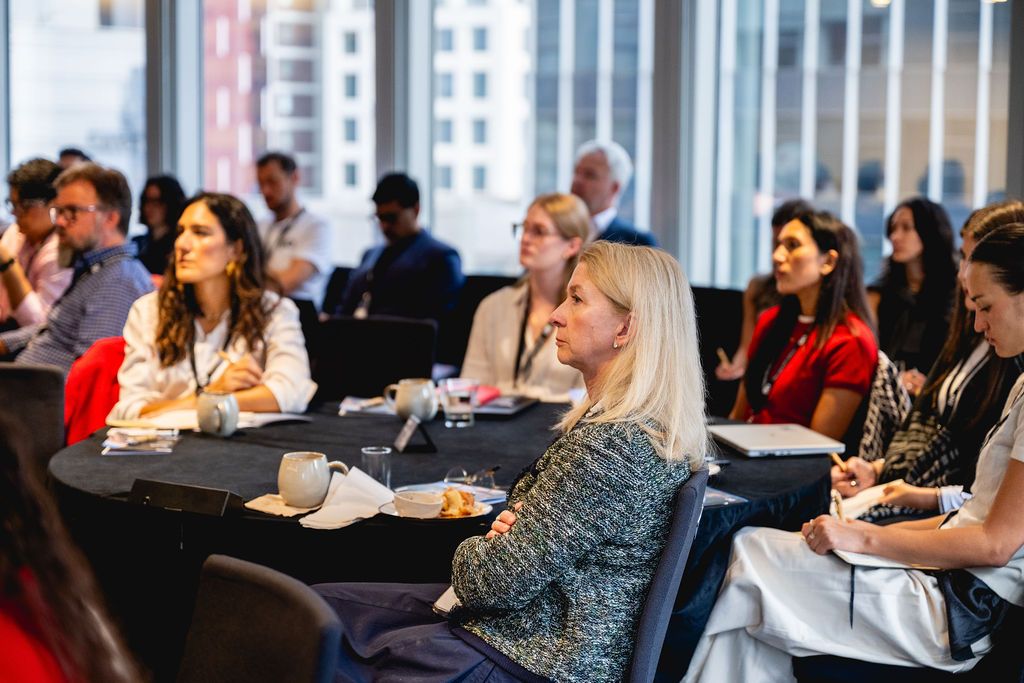
Building for volatility: what we learned at the EiQ Global Summit in New York
What responsible sourcing and procurement leaders discussed at the EiQ Global Summit in New York, September 2026

EiQ by LRQA positioned as an Innovator in the 2026 Verdantix Green Quadrant
EiQ has been positioned as an Innovator in the Verdantix Green Quadrant: Supply Chain Sustainability Software (2026) – an independent benchmark of 16 providers.