HRIA Scan
Assess human rights risk by country and commodity
Your audit programme covers the sites you buy from. HRIA Scan assesses the commodity – and the farms, processors and labour arrangements behind it.
Know what you are buying into
Our country and commodity human rights assessment, HRIA Scan, works out which human rights risks are salient in a particular commodity from a particular country. Each one is classified by how your business is connected to it, scored for severity against the UN Guiding Principles, and mapped to the regulations you report under.
- You choose a country and commodity pair from your own sourcing.
- Practitioners assess it against a documented methodology, using EiQ risk data and structured external research.
- You receive a scored assessment of the issues that matter most, and what you can do about them.
Why it matters
Audits and assessments answer different questions
An audit tells you what conditions were like at one site, on one day.
The identify-and-assess duty in incoming due diligence law asks something different, which is which human rights risks are most severe in a commodity from a particular country, across the whole value chain, and what you have done about them.
Most responsible sourcing programmes are built to answer the first question, while the second often has no clear owner.
What a country rating misses
A country rating gives a view of the whole economy, not of what you buy from it. It can't tell you which issues are salient inside the commodity, which of them your own buying practices contribute to, or what you could realistically change.
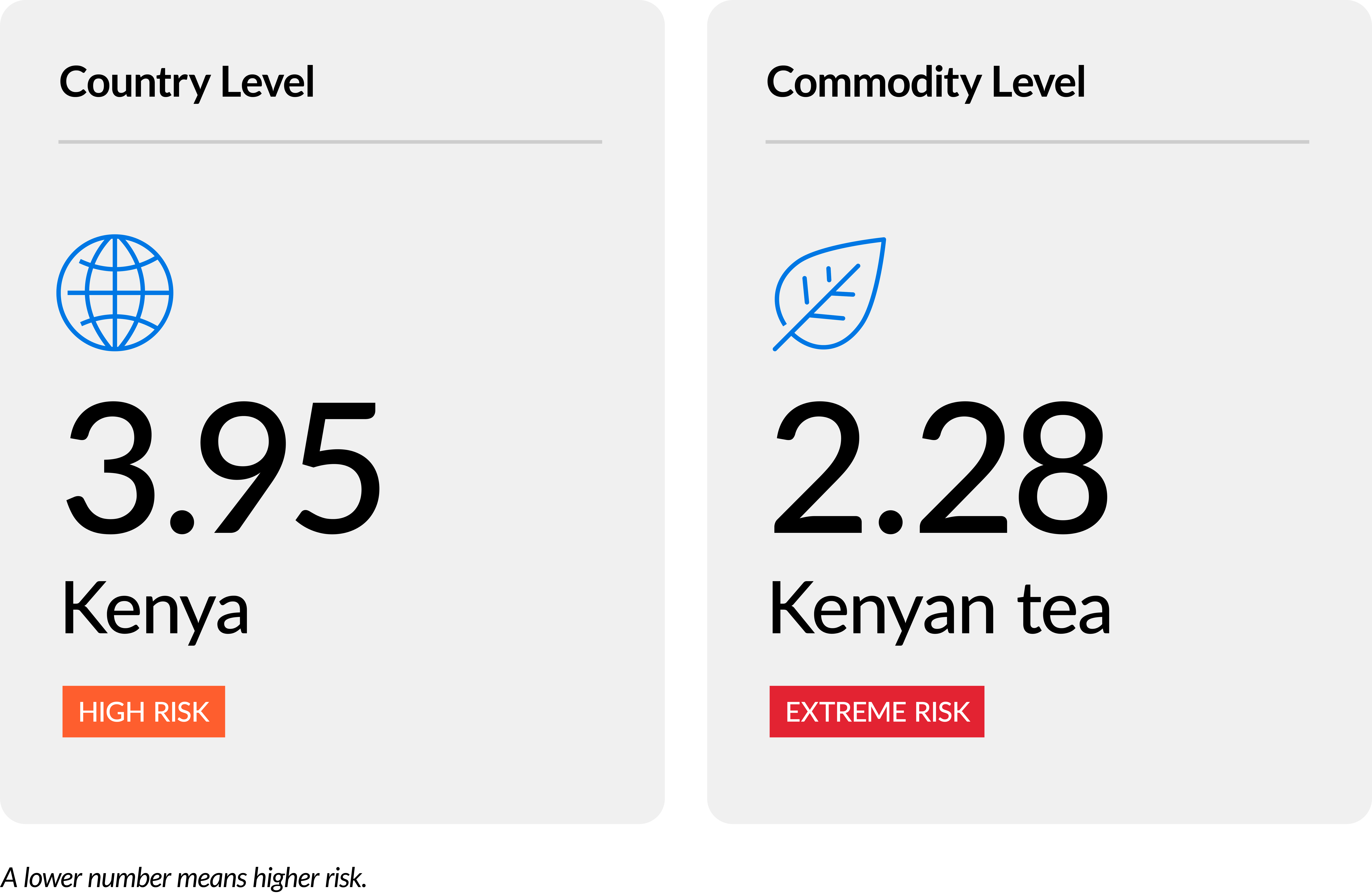
Take Kenyan tea. Kenya as a country reads 3.95 on EiQ's risk scale, which is high risk. Narrow that to Kenyan tea and the number drops to 2.28, which is extreme, with the social component at 1.52. On this scale, a lower number means higher risk.
Method
How an assessment is built
The method is grounded in the UN Guiding Principles, OECD guidance, and the Danish Institute for Human Rights methodology.
Roughly two thirds of the analysis comes from EiQ's own data, more than 100 million data points across more than 1 million suppliers in 195 countries, with structured external research making up most of the rest. The research is AI-assisted, and every assessment goes through practitioner review before it reaches you.
An assessment maps every issue that could be salient in that country and commodity, then scores each one for severity and likelihood, with a practitioner signing off which are retained. What was set aside is recorded alongside what was kept, so you can follow the reasoning behind the conclusions. A scan is typically completed in one to two weeks.
Each retained issue carries three findings:
As caused, contributed to or linked. Where an issue sits on that scale decides what you are expected to do about it.
Scored against the UN Guiding Principles on the gravity of the harm, how many people it reaches, and how hard it would be to put right.
Meaning what you could realistically change about the conduct causing the harm.
What you receive
- A scored assessment of each issue, with its connection classification and a finding on leverage
- A table matching each issue to the regulations that cover it
- An action plan split across 0 to 6 months, 6 to 12 and 12 to 24, with every action attached to a specific issue
- The source register, with every source graded for confidence
- A tier upgrade pathway, naming the issues that cannot be settled from a desk and what it would take to settle them
Regulation
Which obligations reach you
EU Forced Labour Regulation
14 December 2027
Bans products made with forced labour from the EU market, regardless of your size or sector. Enforcement works from risk, assessed by product and geography. Stock already in a warehouse on that date is in scope.
Where a scan says you need more
A scan is desk research, but some issues can’t be settled without talking to people. It tells you which countries and commodities need interviews or fieldwork, and gives you a documented reason for escalating them, rather than reacting to a headline.
Where that happens, the assessment points you to the next step. HRIA Scan is the first of three tiers:
- HRIA Diagnostic adds interviews with people close to the issue, drawn from the stakeholder list the scan has already built.
- HRIA Field adds in-country fieldwork, including site visits, worker interviews and engagement with unions and management.
Both are delivered by our advisory team.
FAQs
See an assessment before you decide
Ask for a walkthrough and a member of our team will take you through a completed assessment for one country and commodity.
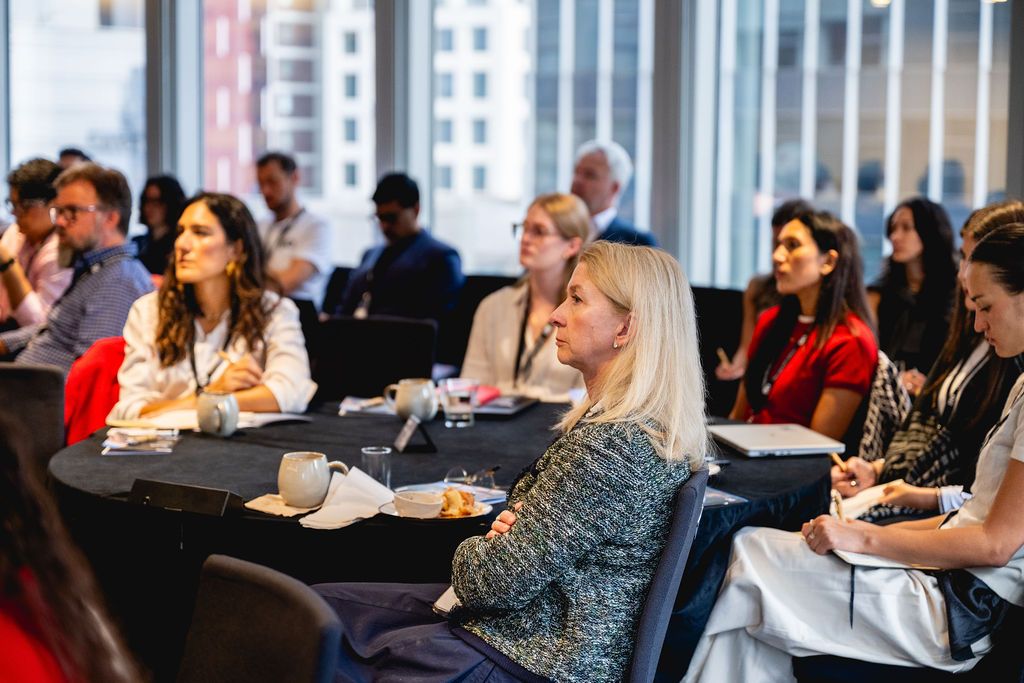
Building for volatility: what we learned at the EiQ Global Summit in New York
What responsible sourcing and procurement leaders discussed at the EiQ Global Summit in New York, September 2026
The myth of the safe sourcing market: why reputation does not equal risk data
Just how safe is a "safe" sourcing market? Reputation and heritage are not the same as risk data. The gap between them is dangerous.
Workers Pay the Price: The Wider Supply Chain Impact of Middle East Instability
Instability in the Middle East is increasingly being reflected in global supply chain disruption as a set of interconnected pressures moving through energy systems, labour structures and manufacturing networks.